nuts-knooppunt
Policy Enforcement Point (PEP)
NGINX-based reference implementation that enforces authorization decisions from Knooppunt’s PDP.
Architecture
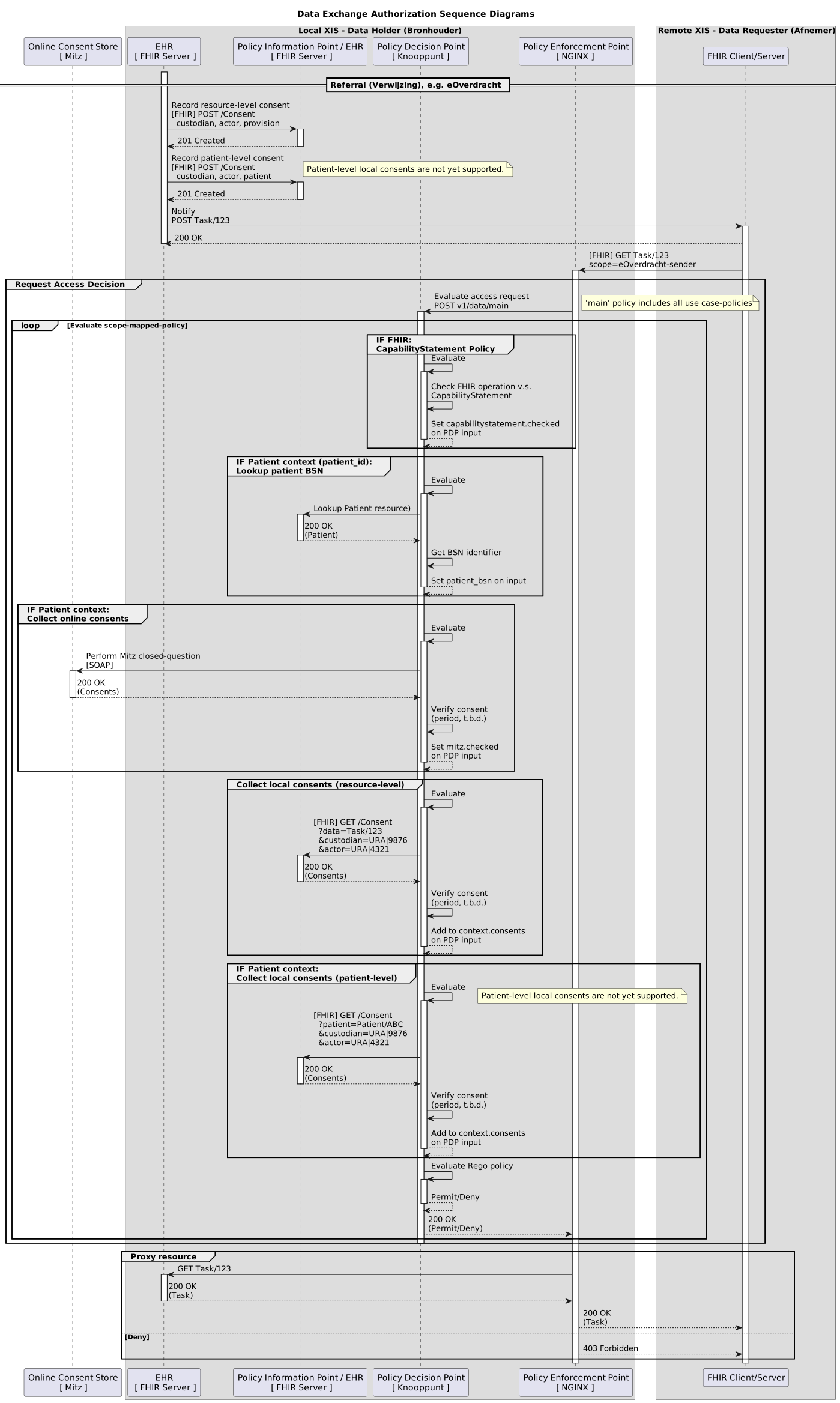
The PEP uses nginx subrequests to proxy calls to Nuts node and PDP via internal locations.
Quick Start
# Start PEP with rest of stack
docker compose --profile pep up -d

# Test requires a valid OAuth token from Nuts node
# The PEP will introspect the token and validate DPoP if present
Endpoints:
- PEP:
http://localhost:9080 - PDP:
http://localhost:8081/pdp(internal API)
How It Works
- Extract bearer/DPoP token from
Authorizationheader - Introspect token via Nuts node
/internal/auth/v2/accesstoken/introspect(RFC 7662) - Validate DPoP binding if token has
cnf.jktclaim via/internal/auth/v2/dpop/validate(RFC 9449) - Pass introspection claims directly to PDPInput (no mapping - PD defines claim names)
- Call Knooppunt PDP for authorization decision
- Enforce decision: allow (200) or deny (403)
Configuration
Environment variables in docker-compose.yml:
# FHIR API path exposed by PEP (default: /fhir)
FHIR_BASE_PATH=/fhir
  # FHIR path on backend server (default: same as FHIR_BASE_PATH)
  # Use for HAPI multi-tenancy: /fhir/DEFAULT
FHIR_UPSTREAM_PATH=/fhir

  # Backend connections
FHIR_BACKEND_HOST=hapi-fhir
FHIR_BACKEND_PORT=7050
KNOOPPUNT_PDP_HOST=knooppunt
KNOOPPUNT_PDP_PORT=8081

  # Nuts node connection (Authorization Server)
NUTS_NODE_HOST=knooppunt
NUTS_NODE_INTERNAL_PORT=8081

  # Data holder (this organization)
DATA_HOLDER_ORGANIZATION_URA=00000666
DATA_HOLDER_FACILITY_TYPE=Z3

  # Security: Configure expected hostname for DPoP URL validation
  # Prevents Host header spoofing attacks. Falls back to Host header if not set.
PEP_HOSTNAME=pep.example.com
Presentation Definition
The Presentation Definition (PD) is configured on the authorization server (Nuts node), not in the PEP. For BgZ use cases, the PD typically requires:
- X509Credential - Organization identity with URA number
- HealthcareProviderRoleTypeCredential - Vektis facility type
- NutsEmployeeCredential - Employee identity for Mitz consent verification
See test/e2e/pep/testdata/accesspolicy.json for an example PD used in e2e tests.
Claim Flow (No Mapping Required)
Claims flow directly from the Presentation Definition to the PDP without any mapping in the PEP:
Verifiable Credentials    Presentation Definition    Introspection Response    PDPInput
        │                         │                          │                    │
        │    ┌────────────────────┘                          │                    │
        ▼    ▼                                               │                    │
   VC claims extracted using PD field constraints ──────────►│                    │
        │                                                    │                    │
        │    The `id` field in each PD constraint            │                    │
        │    becomes the claim name in introspection         │                    │
        │                                                    ▼                    │
        │                                              { "active": true,          │
        │                                                "subject_id": "...",     │
        │                                                "subject_role": "..."    │
        │                                              }                          │
        │                                                    │                    │
        │                                                    │  passed through    │
        │                                                    └───────────────────►│
The PEP passes claims directly from introspection to the PDP. The Presentation Definition must use
id fields that match what the PDP expects.
PD Constraint IDs (for PDP/Mitz)
The PEP passes all non-standard claims through to the PDP. The PDP expects these id values in the PD constraints:
PD Constraint id |
VC Path Example | Description |
|---|---|---|
subject_id |
$.credentialSubject.identifier |
Employee/practitioner identifier |
subject_role |
$.credentialSubject.roleName |
Role code (e.g., “Medisch Specialist”) |
subject_organization_id |
$.credentialSubject.san.otherName |
URA number |
subject_organization |
$.credentialSubject.subject.O |
Organization name |
subject_facility_type |
$.credentialSubject.roleCodeNL |
Vektis facility type code |
Additionally, the PDP receives from OAuth:
client_id- OAuth client identifier (DID)scope- OAuth scopes (converted toclient_qualificationsarray)
PDPInput Format
The PEP sends requests matching the Go PDPInput struct:
POST /pdp

{
  "input": {
    "subject": {
      "type": "organization",
      "id": "did:web:example.com",
      "properties": {
        "client_id": "did:web:example.com",
        "client_qualifications": [
          "bgz"
        ],
        "subject_id": "000095254",
        "subject_role": "medical-specialist",
        "subject_organization_id": "87654321",
        "subject_organization": "Test Hospital B.V.",
        "subject_facility_type": "Z3"
      }
    },
    "request": {
      "method": "GET",
      "protocol": "HTTP/1.1",
      "path": "/Condition",
      "query_params": {
        "patient": [
          "Patient/patient-123"
        ]
      },
      "header": {},
      "body": ""
    },
    "context": {
      "data_holder_organization_id": "12345678",
      "data_holder_facility_type": "Z3",
      "patient_bsn": ""
    }
  }
}
Expected response:
{
  "result": {
    "allow": true,
    "reasons": []
  }
}
DPoP Token Binding
When the introspection response includes a cnf.jkt claim, the PEP validates DPoP:
- Extracts
DPoPheader from request - Calls Nuts node
/internal/auth/v2/dpop/validatevia internal subrequest - Returns 401 if validation fails
This ensures the access token is bound to the client’s proof-of-possession key.
Testing
Unit Tests
cd pep/nginx/js
npm install
npm test
E2E Tests
# Run from repository root
go test ./test/e2e/pep/... -v
The e2e test (in test/e2e/pep/authorization_test.go):
- Starts Nuts node and HAPI FHIR containers, Knooppunt PDP in-process, and PEP container
- Issues X509Credential, NutsEmployeeCredential, and HealthcareProviderRoleTypeCredential
- Requests an access token with scope
bgz - Tests the full PEP authorization flow with real credential validation
Implementation Details
- nginx/nginx.conf - Main NGINX config (rate limiting, request size limits)
- nginx/conf.d/knooppunt.conf - PEP routes and upstreams
- nginx/js/authorize.js - Authorization logic (NJS)
- nginx/js/authorize.test.js - Unit tests for authorization logic
Production Notes
The PEP requires:
- Nuts node with:
- Introspection endpoint at
/internal/auth/v2/accesstoken/introspect - DPoP validation endpoint at
/internal/auth/v2/dpop/validate
- Introspection endpoint at
- Presentation Definition configured on the authorization server (Nuts node) with claim IDs matching what the PDP expects
- PDP with policies matching the scopes/qualifications in the access tokens
Limitations:
- Single-tenant only: This PEP supports a single FHIR backend. Multi-tenant setups (e.g., HAPI multi-tenancy) are not supported because the PDP has no tenant context for patient lookups and consent checks. Deploy separate PEP instances per tenant if needed.
Considerations for production:
- Claim forwarding: This PoC forwards all non-standard introspection claims to the PDP. In production, consider explicitly allowlisting which claims to forward based on the Presentation Definition, rather than forwarding everything.
- Log security: PEP logs contain OAuth metadata (client_id, scope) and error details for debugging. Ensure appropriate log access controls and retention policies.